
What Happens to Our Skin as We Age?
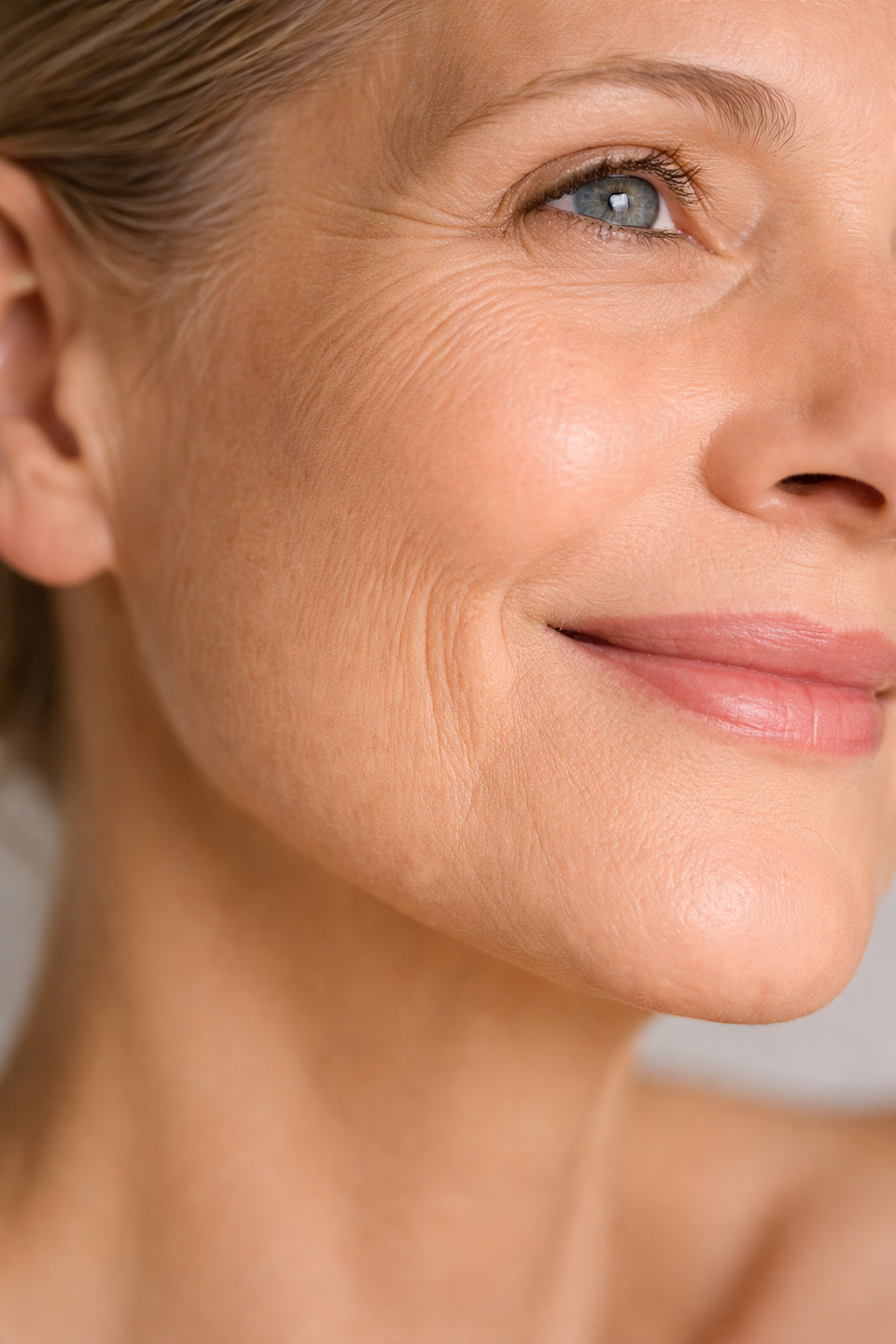
Aging is a natural biological process that affects every organ in the body — including the skin. While we often associate aging with wrinkles and fine lines, the visible changes are only part of a deeper transformation happening beneath the surface.
Understanding how the skin evolves over time allows us to care for it more intentionally and with greater respect for its changing needs.
The Skin’s Natural Structure
The skin is the body’s largest organ and serves as a protective barrier between us and the external environment. It is composed of three main layers:
• Epidermis – the outer layer responsible for protection and skin tone
• Dermis – where collagen and elastin help maintain firmness and resilience
• Hypodermis – the deeper structural layer that provides cushioning and support
In youthful skin, these layers work efficiently together to maintain smoothness, elasticity, and hydration.
Over time, however, their activity gradually slows.
Thinning and Slower Renewal
As we age, the skin’s renewal cycle becomes less efficient. Cell turnover slows, and collagen production naturally declines.
This may result in:
• Thinner appearance
• Increased fragility
• Slower visible recovery
The skin is still functioning — just at a gentler pace than before.
Loss of Elasticity
Collagen provides firmness, while elastin allows the skin to bounce back after movement. With time, both decrease gradually.
This change may contribute to:
• Fine lines
• Reduced firmness
• More noticeable expression lines
These changes are part of structural evolution, not sudden deterioration.
Increased Dryness
Mature skin often produces less natural oil. This can affect comfort and moisture retention, especially in areas like:
• Face
• Neck
• Hands
When hydration levels decline, the skin may feel tighter or appear less luminous.
Uneven Tone and Dullness
Over the years, sun exposure and environmental stress can influence pigmentation patterns.
This may lead to:
• Uneven tone
• Dark spots
• Reduced brightness
These shifts are cumulative — the result of time and exposure rather than isolated events.
Aging Is Biological — But Care Is Intentional
While aging cannot be stopped, how we support the skin through each stage can influence how it looks and feels.
Simple, consistent habits make a difference:
• Daily sun protection
• Gentle cleansing
• Consistent hydration
• Avoiding overly harsh ingredients
• Maintaining balanced nutrition
Rather than trying to reverse time, the goal becomes supporting the skin’s natural evolution with nourishment and protection.
A thoughtful skincare routine should adapt as the skin changes. Even before visible signs appear, maintaining hydration and protecting against environmental stress can help preserve balance over the long term.
Aging is not a flaw to correct — it is a transition to care for with awareness. Our Gentle Botanical Skincare